Fish Snax Journal
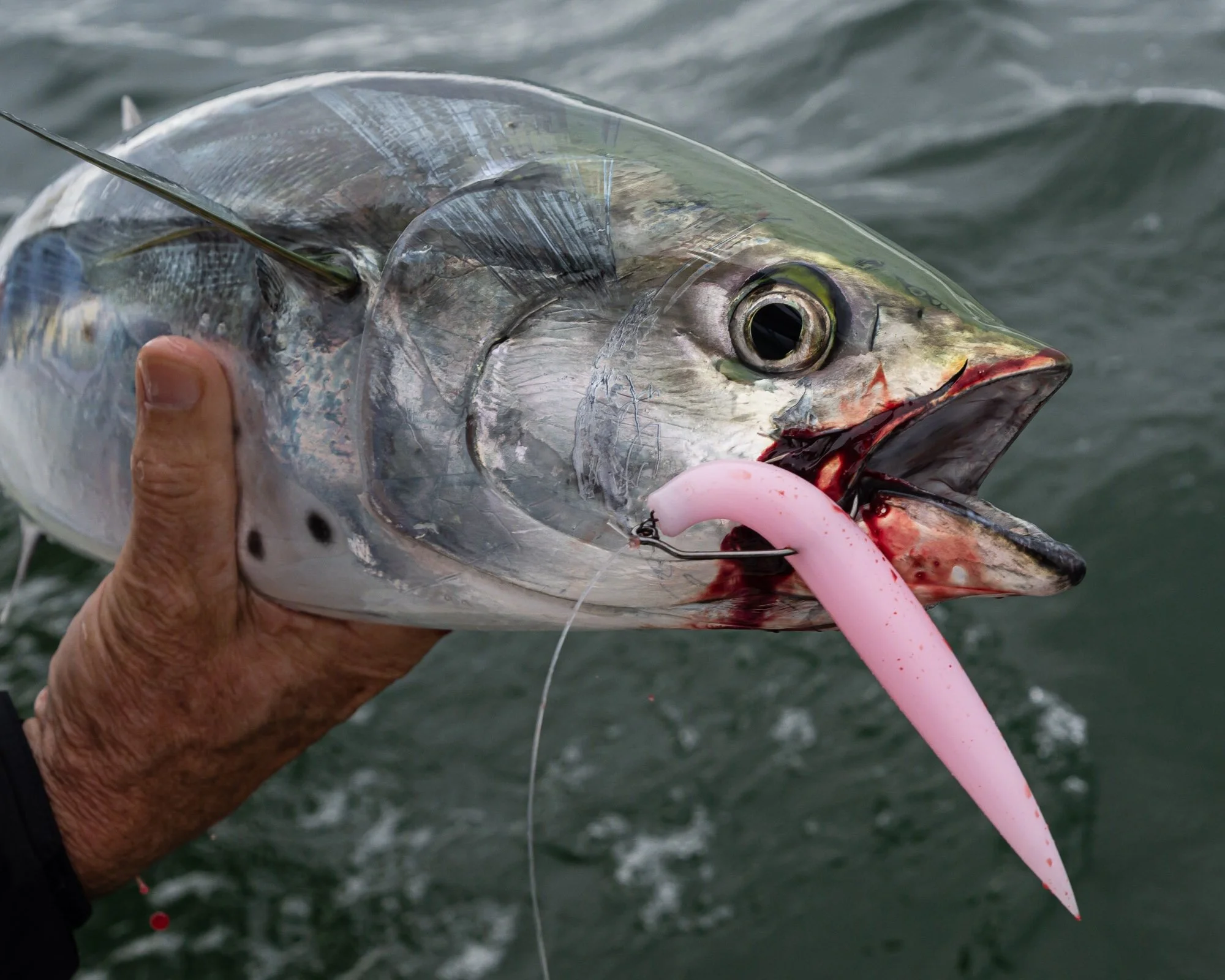
Lite Pink Albie Snax gets it done from Jetty in Menemsha.
The Fish That Hooked Me: A Lifetime Fascination with False Albacore
I've been fishing the waters of New England since I was a small boy. My earliest memories of fishing go back to about age six, when I began surfcasting for striped bass with my father. Like many young anglers, I was fascinated by everything about fishing—the anticipation of a strike, the mystery of what was beneath the surface, and the possibility that every cast might connect me with something unexpected.
Fishing with my father gave me the foundation for a lifetime on the water. It also taught me, long before I realized it, to pay attention. Tides mattered. Wind mattered. Bait mattered. The same stretch of water could look completely different from one day to the next.
But as a teenager, I encountered a fish that changed the way I thought about fishing.
It was the false albacore.
My First Albies at Menemsha
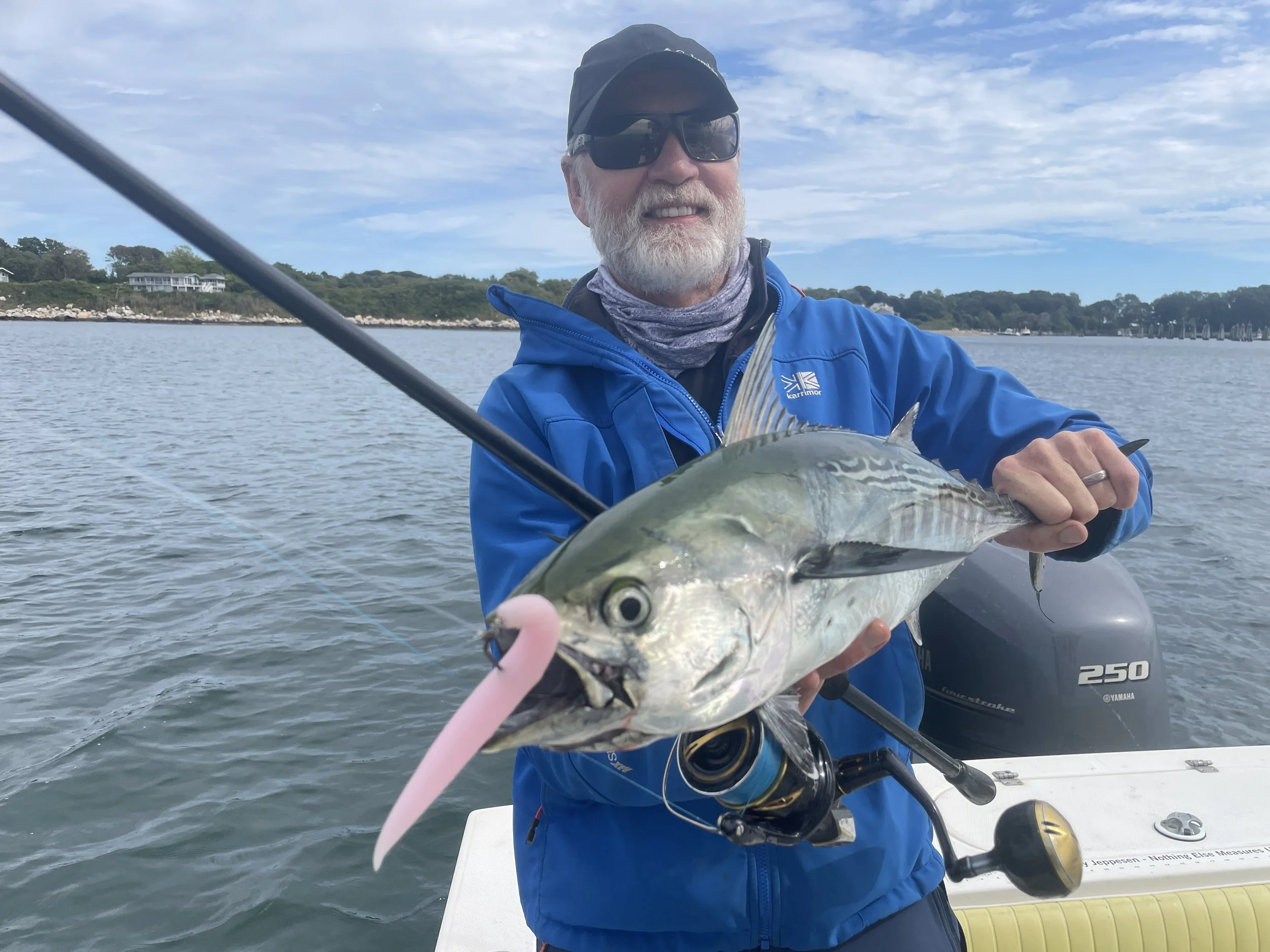
I caught my first false albacore—and my first bonito—as a teenager while fishing from the jetties at Menemsha on Martha's Vineyard.
I still remember the fascination I felt watching those fish feed.
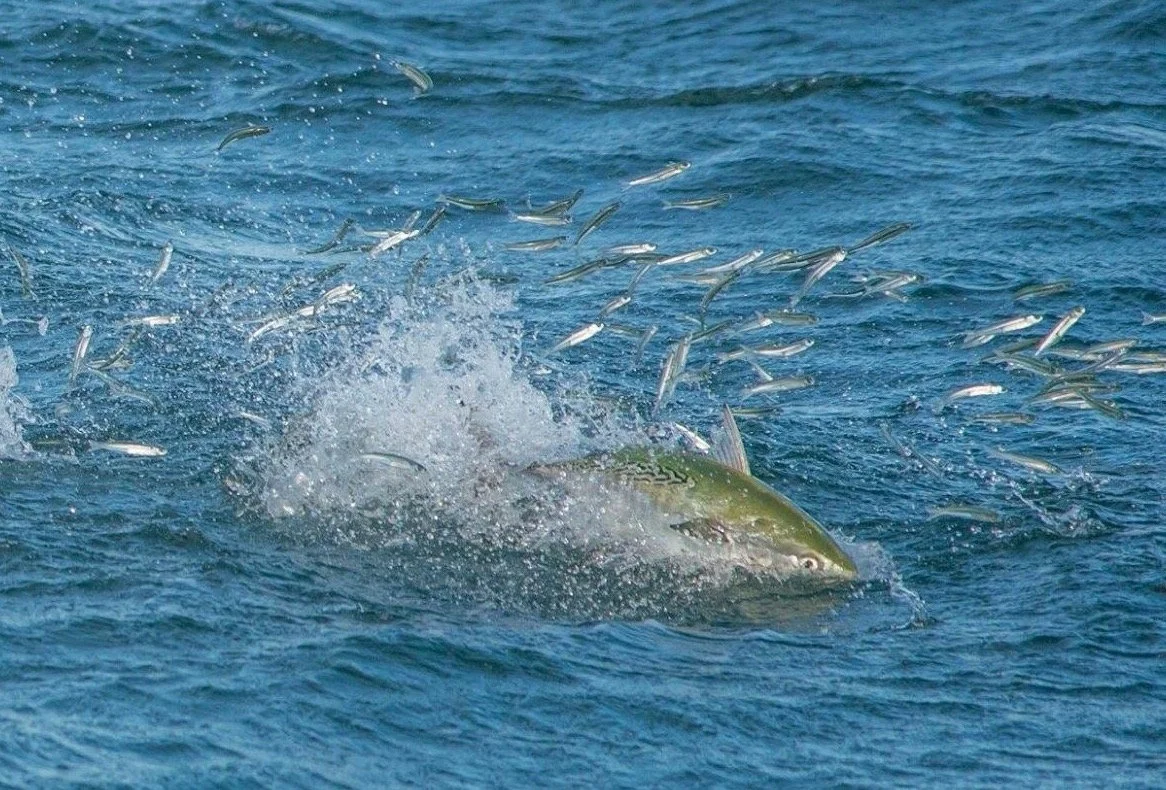
False albacore don't simply rise to bait in the way we often see other gamefish feed. They slash through bait schools with tremendous speed. A seemingly quiet piece of water can suddenly erupt as bait scatters and albies tear through the school. Seconds later, the surface may be quiet again.
There is an intensity to an albie feed that immediately captures your attention.
Then I hooked one.
Anyone who has caught a false albacore on appropriate spinning or fly tackle understands what happens next. The reel screams. Line disappears from the spool at a rate that can be startling the first time you experience it.
That first run was unlike anything I had experienced fishing for striped bass.
I was immediately fascinated.
The Challenge Was Part of the Attraction
The more I fished for albies, the more I realized that their speed was only part of what made them interesting.
They could also be remarkably selective.
There were days when fish were feeding aggressively all around us, yet catching them was surprisingly difficult. You could watch albies slash through bait, make what seemed like a perfect cast, and retrieve a lure directly through the feed without a strike.
At the time, metal jigs were among the most common lures used for false albacore. They offered an obvious advantage: they could be cast a tremendous distance.
And distance matters in albie fishing.
But I began to notice that metal was not always the answer.
Some days the fish readily attacked a rapidly retrieved metal lure. On other days, the same presentation seemed almost invisible to them. The fish were clearly feeding, but they simply weren't interested in what we were offering.
Those difficult days interested me more than the easy ones.
I wanted to understand why.

Open wide for Albies on the chew.
Learning to Let the Fish Dictate the Presentation
As I became more sophisticated in my fishing techniques, I began watching the behavior of the fish more carefully.
What bait were they feeding on?
How were they moving through the bait?
Were they chasing individual baitfish, or were they slashing through a tightly packed school?
Were the fish moving rapidly?
Were they holding in a particular current?
Did their feeding behavior change with the tide?
I began to realize that we anglers often make a fundamental mistake. We decide how we want to fish and then try to convince the fish to cooperate.
False albacore taught me the opposite.
The fish should dictate the presentation.
A lure and technique that work during an aggressive surface feed may be completely wrong when the same fish become selective an hour later.
That lesson became one of the foundations of the way I fish today.
My Introduction to the Albie Snax
During this period, I was introduced to a soft-plastic lure originally designed by Alex Peru, the stepson of one of my close friends.
The lure would become known as the Albie Snax.
What immediately interested me was that the lure addressed one of the central problems in false albacore fishing.
You needed casting distance, but you also needed versatility.
The Albie Snax had enough density and a compact enough profile to cast long distances. But unlike a metal jig, I wasn't limited to one primary style of presentation.
I could fish it fast.
I could slow it down.
I could give it a subtle twitch.
I could allow it to drift naturally in the current.
That versatility allowed me to change the presentation based on what I was actually observing.
If the fish were chasing rapidly moving bait, I could accelerate the retrieve.
If they became selective, I could slow down and twitch the lure through the feeding zone.
At times, I could almost dead drift the lure and allow the current to provide much of the presentation.
For me, that changed albie fishing.
Color Taught Me Another Lesson
I also began experimenting with color.
White and pearl were obvious choices. They closely resembled many of the small baitfish false albacore commonly feed on and remain extremely effective colors.
But fishing has a wonderful way of challenging assumptions.
One of my most memorable lessons about color came while fishing at Cape Lookout in North Carolina.
Bubblegum pink proved remarkably effective.

Sometimes the Albies in North Carolina only want Bubblegum.
It wasn't necessarily the color I would have chosen if my only goal had been to perfectly imitate a natural baitfish. But the fish responded to it.
That experience reinforced another lesson I've carried with me for years.
Pay attention to what the fish are telling you, not what you think they should be doing.
There is a place for understanding baitfish and matching the hatch. But there is also a place for experimentation.
Sometimes the fish provide the answer very quickly.
Why Albies Still Fascinate Me
Decades after catching my first false albacore at Menemsha, I remain fascinated by these fish.
Part of it is certainly the fight.
There are few experiences in Northeast fishing that compare with the first run of an albie on light spinning tackle or a fly rod. The sound of a reel rapidly giving up line never gets old.
But the fight isn't the primary reason I've remained interested in them.
It's their behavior.
False albacore force an angler to observe.
You have to watch the bait.
You have to watch the birds.
You have to think about tide and current.
You have to anticipate where the fish are moving rather than simply chasing where they were a few seconds ago.
Most importantly, you have to be willing to change.
The retrieve that caught fish yesterday may not work today. The lure that produced an immediate strike in the morning may be ignored later in the tide. Fish feeding aggressively on one type of bait may become extraordinarily selective when the forage changes.
Albies have humbled me many times.
Those are often the days I've learned the most.
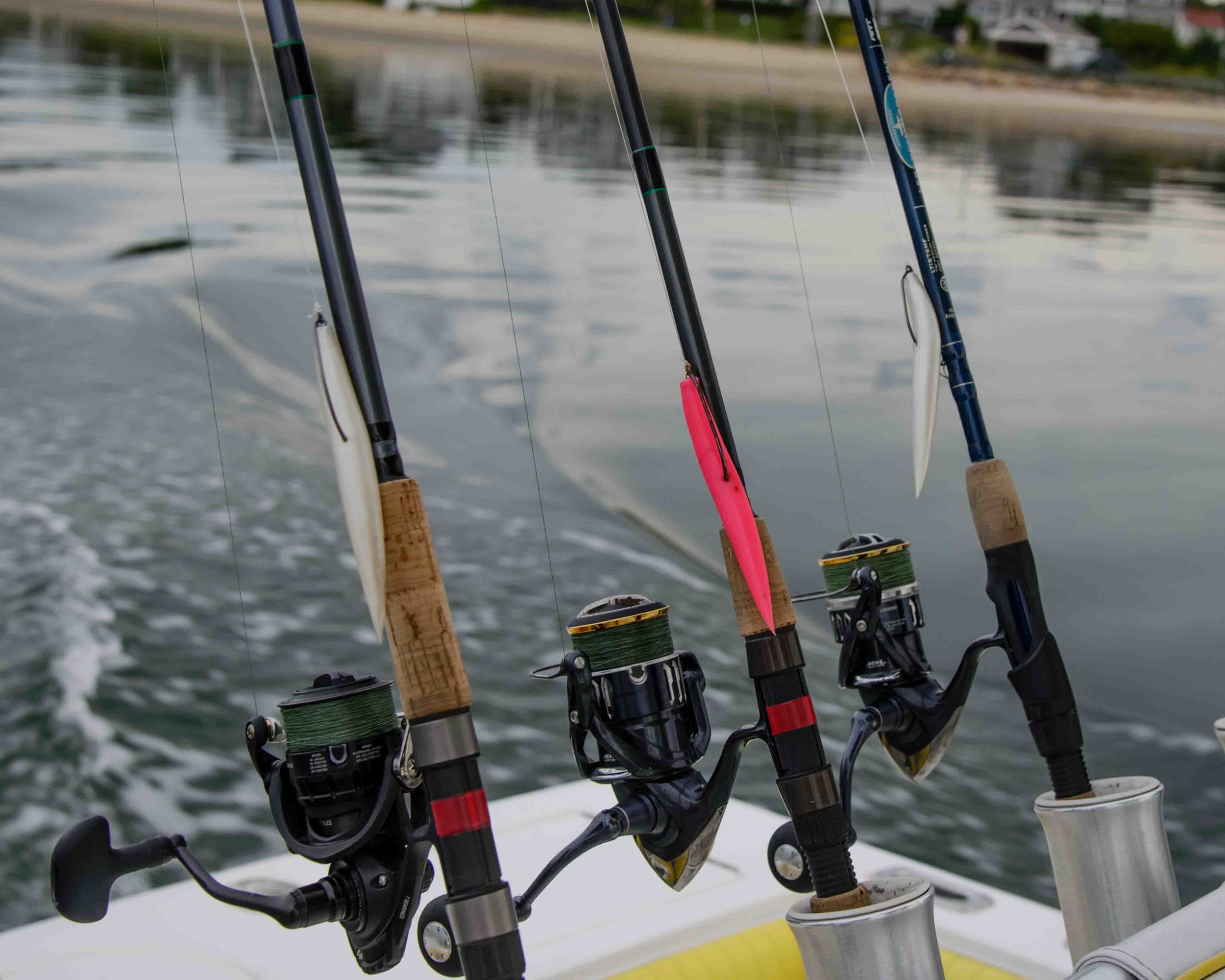
Light tackle spinning rods rigged and ready for Albie Fishing.
The Fish Are Always Teaching
Over a lifetime of fishing, I've come to believe that the best anglers share one characteristic: they pay attention.
Every tide provides information.
Every bait school provides information.
Every refusal provides information.
Even a missed strike can tell you something.
False albacore taught me this lesson more clearly than perhaps any other fish I've pursued.
The fish are always teaching.
Our job is to pay attention.
That's the philosophy behind the Fish Snax Journal. My hope is to share the observations, successes, mistakes, and lessons I've accumulated over decades on the water.
I certainly don't have every answer. That's one of the reasons I continue to fish.
There is always another tide.
There is always another feed.
And there is always something else to learn.